
CASE STUDY · RECRUITMENT STRATEGY & SOCIAL ADVOCACY
Parnassia LIB
How a specialized care unit went from 0 to 15 applicants in 3 months.
IN SHORT
The core of this project
CUSTOMER
Parnassia LIB. Long-Term Intensive Treatment, The Hague
CHALLENGE
Job openings for psychiatrists and nurses remain unfilled despite nationwide campaigns
APPROACH
25 employee videos with personalized calls to action, supplemented by an informative in-depth video
RESULT
15 serious job interviews in three months—only with people who knew what they were getting into
RELEASE NOTES · WATCH THE MAIN FILM
DON'T FIGHT AGAINST CORPORATE, BUT WORK AROUND IT
Thinking
The first meeting quickly made it clear what the problem was. The national website and social media channels were difficult to customize for a single specific department. And there was no need to do so anyway.
Instead of trying to change the corporate system, we decided to work around it. The insight was simple: the department’s 300 employees are the best recruiters themselves. They went to school with the target audience. They have former colleagues on LinkedIn. They’re in the same Facebook groups as the psychiatrists and nurses we were looking for.
We developed a strategy that focused on the employees, not the organization. No reference to an impersonal application form, but a direct, personal invitation from someone you might already know.

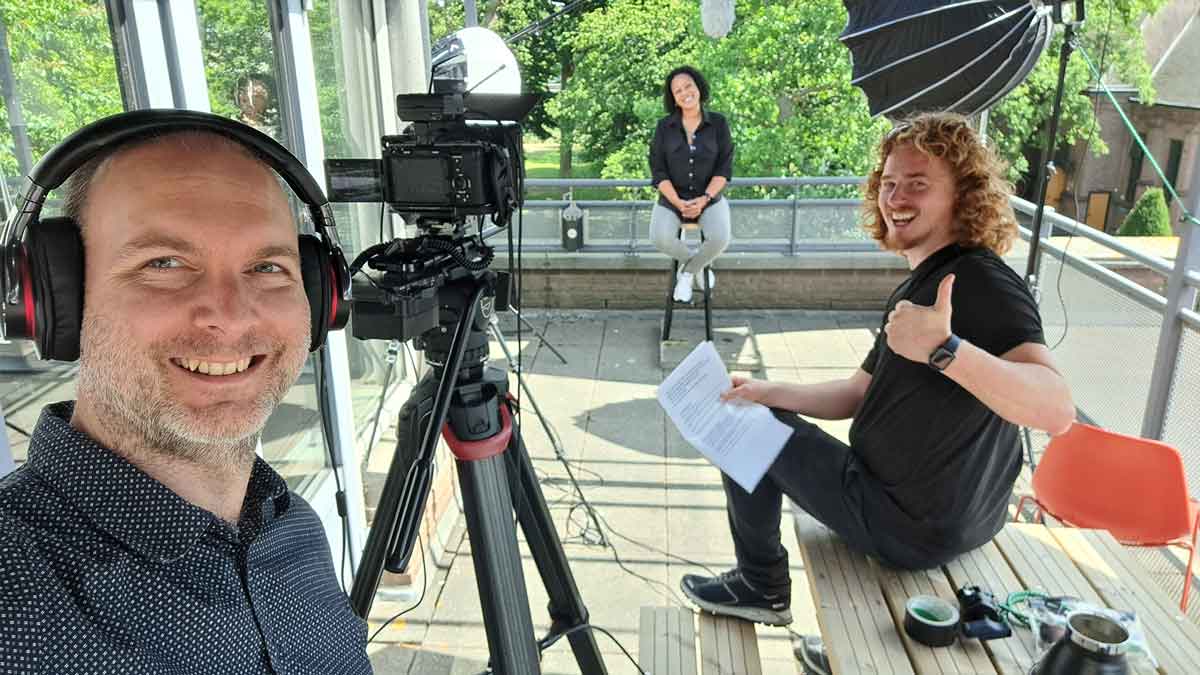
FROM 300 VOLUNTEERS TO 25 FACES
Rotate
There was a high level of enthusiasm: nearly all 300 employees wanted to participate. We selected a group of 25 people who reflected the diversity of the team, representing different roles, backgrounds, and levels of experience.
No scripts. Just one straightforward question: “Why are you here every day?” That question yielded honest, candid stories that you can’t stage. At the end of each video, there’s a personal call to action: “Send me a personal message if you’d like to chat.”
That turned out to be the deciding factor. No link to a job listing page, no form—just a DM to a real person.
FILTERING AT THE GATE
Share
To minimize the burden on managers, we built a smart screening process into the workflow. Four steps, with a real conversation taking place only at the very end:
Step 1. The DM: Interested parties send a private message to the employee featured in the video.
Step 2. The warm response: The employee responds with an enthusiastic but formal email.
Step 3. Going deeper: That email contained a link to a longer informational video that we had produced. It explained the depth of the work and introduced the manager.
Step 4. The Match: Only if someone was still enthusiastic after watching the in-depth video would a tour or interview follow.
That way, only the people who really knew what they were getting into made it to the table. This saved managers a considerable amount of time on job interviews that had yielded nothing.
In three months: 15 serious job interviews. An immediate influx of hard-to-find candidates. And an unexpected side effect we hadn’t anticipated: the employees who participated felt proud. They were the heroes of their own recruitment effort.
Deliverables
✓ 25 short employee videos with personalized calls to action (check out a few of them here)
✓ 1 informative in-depth video for the second step in the funnel
✓ Campaign Strategy and Funnel Design
THE QUESTIONS · WHAT OTHERS WANTED TO KNOW, TOO
Frequently Asked Questions
Why is employee advocacy more effective than a nationwide recruitment campaign for specialized positions?
Because people trust people, not logos. A psychiatrist who’s on the fence about switching providers won’t respond to a banner ad. But he will respond to a message from someone he knows, or to a video from someone who’s had exactly the same questions. Relatability does what a campaign budget can’t.
How can you prevent employees from feeling overwhelmed by feedback?
By breaking it down into phases. In this campaign, the first step was directed at the employee, but the second step—the in-depth video—automatically filtered out those who weren’t serious. Only people who were still enthusiastic after watching that video were referred to their manager. This makes the system scalable without increasing the workload.
What is the difference between an employer branding video and a recruitment video?
Employer branding builds an image of the organization as an employer over the long term. A recruitment video has a specific goal: to convince people to apply for a specific job opening or join a specific department. For Parnassia LIB, we deliberately chose to focus on recruitment—not on the brand as a whole, but on this team, these people, and this place.
How can you ensure that employee videos don't come across as forced?
By not using scripts. We ask one genuine question: “Why are you here every day?” People talk best when they know what the conversation is about but don’t know exactly what to say. The camera records; the person decides what to share.
Does this approach also work for other professions facing a shortage of workers?
Yes. The logic is the same everywhere: hard-to-find candidates don’t respond to mass communication. They respond to relatability, a personal appeal, and proof that the company is the right fit. Whether you’re looking for IT professionals, healthcare specialists, or technical staff, the principle is the same.
What do I need to set up a campaign like this?
Employees who are willing to put themselves out there—that’s what matters most. The rest is all about organization and production. We handle the strategy, the filming, the editing, and the funnel setup.
Are your job openings still unfilled despite everything the corporate office is already doing?
A twenty-minute conversation is enough to see what's possible.